Rachel Haymer
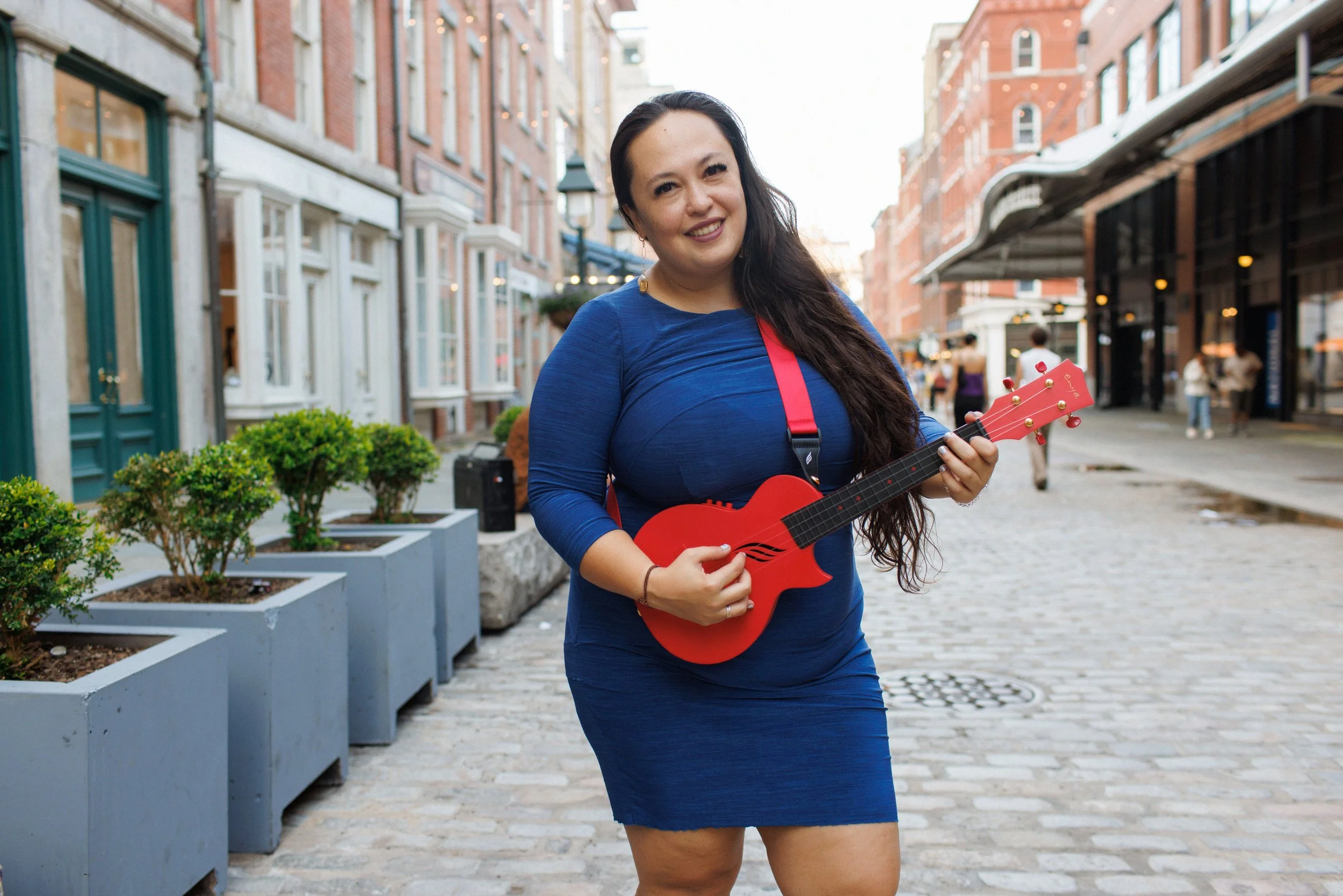
Rachel Haymer is a Honolulu-born, New York City–based singer-songwriter, ukulelist, educator, and musical storyteller whose work blends Hawaiian roots, contemporary folk, reggae, rock, Jewish music, hip hop, and a little bit of the unexpected.
Now based on Manhattan’s Lower East Side, Rachel has spent more than two decades creating music rooted in connection, healing, humor, and belonging. Her secular work combines the warmth of the ukulele with thoughtful songwriting, island rhythms, folk storytelling, and influences ranging from classical music to rock. Her third album, Island Girl Reflections II, explores identity, transformation, and the experience of carrying one island with you while building a life on another.
Rachel is also a longtime New York City street performer and a member of Music Under New York (MUNY), bringing live music into the city’s subway system and turning everyday public spaces into places of connection. Busking has become an important part of her artistic life, giving her the chance to meet audiences exactly where they are.
Her Jewish artistry is just as expansive. Performing and writing as her rap alter ego Kol Isha — Hebrew for “voice of a woman” — Rachel is Co-Director of Rappers & Rabbis, where Jewish tradition meets contemporary hip hop through original music, prayer, spoken word, education, and performance. She is also a longtime Jewish music educator and leader and serves as Vice President of Special Events for the Women’s Cantor Network.
Whether she is performing on a concert stage, in the New York City subway, in a sacred space, or around a room full of people singing together, Rachel approaches music as an invitation: to listen more deeply, laugh more freely, heal what needs healing, and feel a little more at home.
SELECTED Performances
Artist Statement
I make music to create connection.
My work has always lived between worlds: Hawai‘i and New York, sacred and secular, tradition and experimentation, humor and vulnerability, intimacy and performance. I’m interested in what happens in those in-between spaces—where identity shifts, memory resurfaces, and people recognize something of themselves in a song.
The ukulele is at the center of much of my work, but I’ve never seen it as a limitation. I use it as a vehicle for folk, reggae, rock, storytelling, and more harmonically complex musical ideas. In my Jewish work, including my hip hop alter ego Kol Isha, I bring that same instinct for crossing boundaries into prayer, spoken word, and contemporary Jewish music. I’m less interested in keeping genres neatly separated than in asking what each musical language can reveal.
A lot of my work is also rooted in healing. I’ve seen music reach people when ordinary language could not, whether in memory care communities, houses of worship, classrooms, concert spaces, or the New York City subway. That experience has shaped the way I think about performance. I don’t see music as something that only happens on a stage. It can happen anywhere people are willing to listen.
I want my music to feel human. Sometimes that means spiritual. Sometimes funny. Sometimes raw. Sometimes joyful. But underneath all of it is the same intention: to make space for people to feel seen, to feel connected, and perhaps to come away a little more at home in themselves.